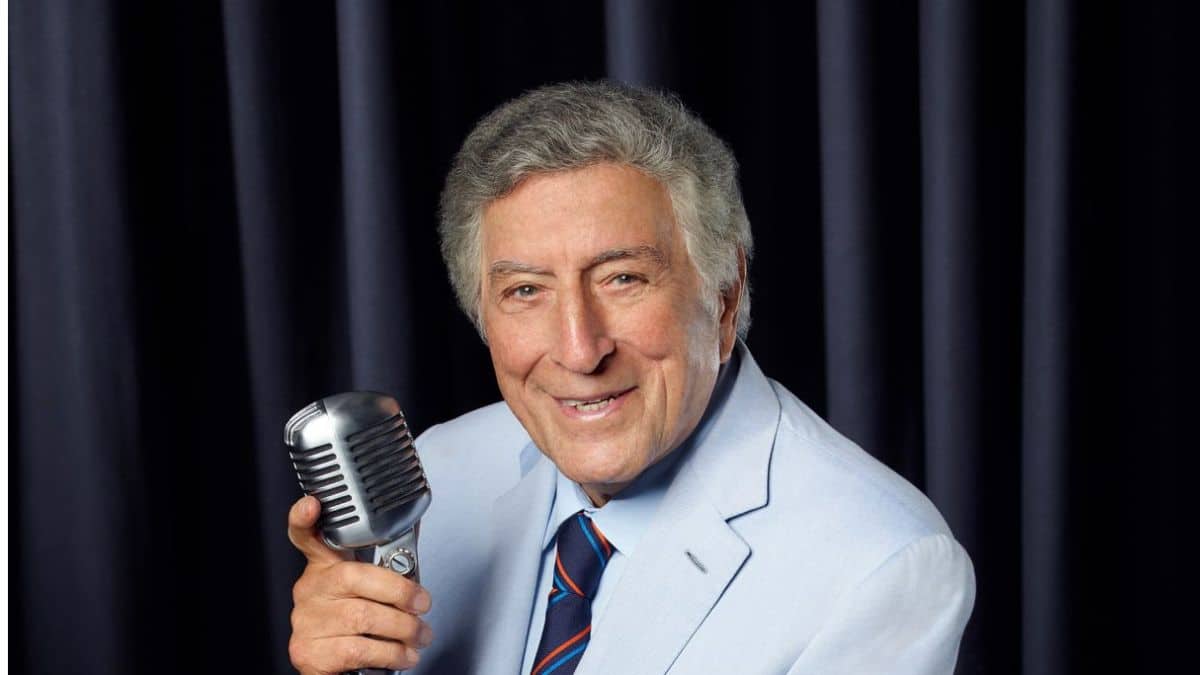
At the age of 96, Tony Bennett, the master pop vocalist known for inventing new standards in jazz, big band, show tunes, and pop music, passed away on Friday.
Just two weeks remained till his birthday. Bennett received two Primetime Emmy Awards, a Lifetime Achievement Award, and 20 Grammy Awards throughout the course of his long career. From Frank Sinatra to Lady Gaga, the “I Left My Heart In San Francisco” singer has garnered a great deal of respect and admiration.
Bennett’s death was verified to The Associated Press by his publicist Sylvia Weiner, who stated that he passed away in his native New York. Bennett had been identified with Alzheimer’s disease in 2016, but the cause was unknown. In addition to releasing more than 70 albums, Tony Bennett competed for 19 Grammy Awards, winning all but two of them after he turned 60. He also received enduring love from his fans and other musicians.
As the oldest surviving performer with a No. 1 album on the Billboard 200 list with “Cheek to Cheek,” his duets album with Lady Gaga, Bennett shattered his own record as the oldest living performer in 2014 at the age of 88. Bennett’s 2016 Alzheimer’s disease diagnosis was made public in February 2021.
He continued to record, tour, and play despite the slow progression of his illness until he announced his retirement from live engagements due to physical difficulties after his final performances at Radio City Music Hall on August 3 and 5, 2021. With “Duets II,” which featured modern singers like Gaga, Carrie Underwood, and Amy Winehouse in her final studio album, he had already topped the charts.
In the Oscar-nominated documentary “Amy,” which depicted Bennett’s relationship with Amy Winehouse, the insecure young vocalist was patiently encouraged by Bennett as they sang “Body and Soul.” Lady Gaga and Porter collaborated on the title track, “Night and Day,” and other songs for Porter’s final album, “Love for Sale,” which was released in 2021.
Such collaborations were a cornerstone of Bennett’s campaign to introduce new audiences to what he called the Great American Songbook because he was one of the few musicians to transition effortlessly between pop and jazz.