
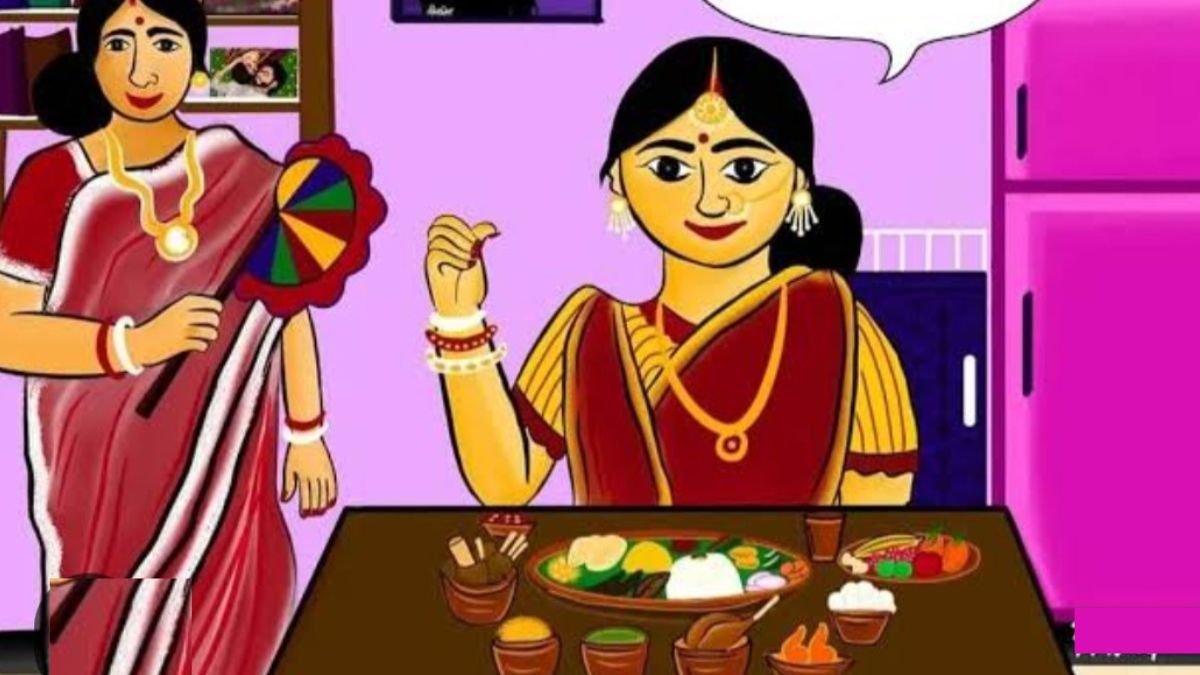
Bouma Shashti is a unique and culturally significant ritual observed predominantly in Bengali Hindu households. This traditional celebration, held in honour of daughters-in-law, reflects the deep-rooted values of matrilineal blessings, fertility, and family unity in Bengali society.
Origin of Bouma Shashti: Worship of Goddess Shashti in Bengali Folk Tradition
The Bouma Shashti ritual is deeply connected to the worship of Goddess Shashti, a folk deity revered as the protector of children, fertility, and maternal welfare in Bengal. In rural and semi-urban Bengal, Goddess Shashti is widely worshipped by women for the well-being of their children and family continuity.
The mythological roots of this ritual are traced back to Bengali folklore where Shashti Devi is believed to bless daughters-in-law with fertility, familial harmony, and longevity. The day is marked by special puja rites, usually performed in front of a Shashti tree (Pilkhan tree or Banyan tree) or a symbolic clay idol.
Timing of Bouma Shashti: Celebrated on the Sixth Day After Jamai Shashti
Bouma Shashti is typically celebrated six days after Jamai Shashti, another important Bengali ritual dedicated to sons-in-law. It falls in the month of Jyeshtha (May–June), during the peak summer season, and aligns with the Shashti tithi (sixth lunar day).
The timing holds spiritual symbolism, reinforcing the cyclical flow of familial reverence, where sons-in-law are honoured first, followed by daughters-in-law. This order signifies a complete familial balance within Bengali social customs.
Ritual Practices of Bouma Shashti: How Bengali Families Celebrate Bouma Shashti
The rituals of Bouma Shashti vary slightly depending on region, but the essence remains consistent. Here’s a breakdown of typical customs:
- Fasting by the mother-in-law: Traditionally, the sasuri (mother-in-law) observes a partial fast on this day and performs the puja for the well-being of her bouma (daughter-in-law).
- Inviting the daughter-in-law: In some families, the married daughter-in-law is ceremoniously invited from her parental home to the in-laws’ residence, echoing a practice similar to Jamai Ador.
- Offering to Shashti Devi: Offerings include seasonal fruits, homemade sweets, rice, and chana dal, often placed under the Shashti tree or before the deity’s image. A thread (suto) is tied to the tree to symbolize the wish for familial bond and longevity.
- Blessings and gift exchange: The mother-in-law blesses the daughter-in-law with shidur (vermillion), bangles, and new sarees, often accompanied by a traditional Bengali meal.
Bouma Shashti Celebration in Kolkata and Suburban Bengal: Continuity of Tradition in Modern Households
In Kolkata, Howrah, North and South 24 Parganas, and other semi-urban regions, Bouma Shashti is still widely observed, though its form has adapted to modern life. Working women and nuclear families have embraced a simplified version of the ritual, focusing on symbolic gestures rather than elaborate feasts.
In modern settings:
- The puja may be brief and performed at home.
- Gift exchanges are retained, but often involve contemporary items like skincare sets, sarees, or gift vouchers.
- Many daughters-in-law choose to reciprocate by touching the feet of the mother-in-law and offering small gifts.