Baul Gaan in Birbhum and Nadia: Rural Mystics of Bengal’s Red Earth
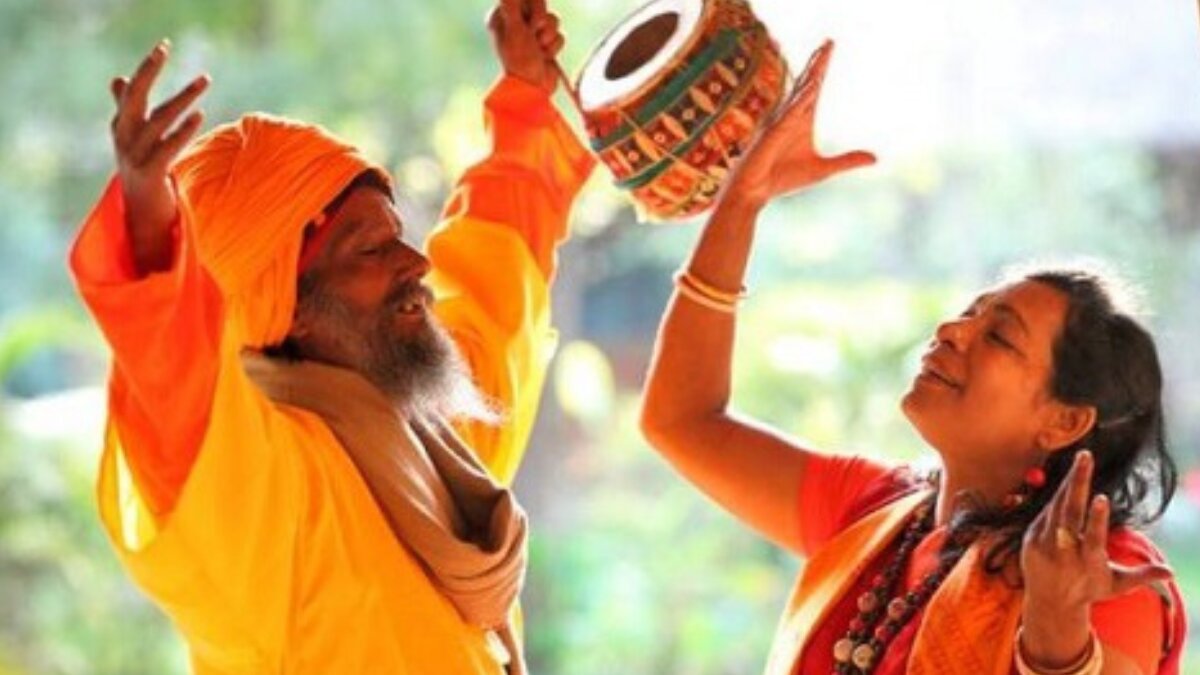
Baul songs are deeply rooted in the red-soil districts of Birbhum, Nadia, and Murshidabad, where mystic minstrels still travel from village to village with their ektaras. Bauls are not just singers, they are philosophers who question caste, religious orthodoxy, and material life through their music.
Their lyrics, often attributed to spiritual leaders like Lalon Fakir, are riddles meant to challenge listeners to find the “Deher Majhe Manush” (the man within the body). At village haats like Sonajhuri and Kenduli Mela, Baul singers gather in large numbers every year. Kenduli, the birthplace of poet Jaydev, becomes a pilgrimage site for Bauls during Makar Sankranti, where music flows for days on open fields.
Baul traditions are orally passed down, often within akhras (communal ashrams), and many female Bauls like Parvathy Baul are now key figures in keeping this tradition alive, blending classical training with rural mysticism.
Bhatiali from Sundarbans to Farakka: River Songs of Bengal’s Boatmen
In river-bound districts like North 24 Parganas, Murshidabad, and the Sundarbans delta, Bhatiali songs are a living expression of the boatmen’s inner world. Unlike romanticized versions often performed on stage, authentic Bhatiali is sung solo, mid-river, with the wind as a natural amplifier.
The themes focus on existential solitude, maternal longing, and surrender to nature’s force. Lyrics like “Majhi re, bhashaili re amar praner nao” (O boatman, you have drifted my life’s boat) reflect the spiritual tension between fate and free will.
Local singers like Abdul Gafur Hali and Radharaman Dutta in East Bengal historically carried the Bhatiali legacy, but in Indian Bengal, the genre is now mostly preserved through field recordings by musicologists and institutions like Rabindra Bharati University’s Folk Music Department.
Bhawaiya in Cooch Behar and Alipurduar: Songs of Love Across the Teesta
Bhawaiya songs originate from northern Bengal’s Cooch Behar, Alipurduar, and the Dooars region. Unlike Baul or Bhatiali, Bhawaiya is not sung by wandering minstrels but by local women and farmers during domestic work or harvest seasons. These songs often express the heartbreak of women whose husbands work as cart-drivers or jute laborers, sometimes across borders in Assam or Bangladesh.
The nasal tone and sliding notes are distinct, designed to carry across open fields. Lyrics are precise in emotion: “Oki gariyal bhai, hatare diya man dilam,” translating to “O cart-driver brother, I gave you my heart with my hands.”
Artists like Pratima Barua Pandey brought Bhawaiya from village courtyards to Kolkata’s auditoriums in the 1960s. Today, local radio stations in Jalpaiguri still air original Bhawaiya tracks recorded from community members.
Jhumur in Purulia and Bankura: Tribal Voices from Bengal’s Forests and Fields
Jhumur is a rhythmic song and dance form performed by Santhal, Kurmi, and Bhumij communities in Purulia and Bankura. Traditionally sung during the post-harvest season and spring festival of Bandna Parab, the songs are accompanied by madol drums and involve line dancing.
Unlike Baul or Bhawaiya, Jhumur has communal call-and-response patterns and involves social storytelling. Lyrics often speak of forest deities, agricultural rituals, and inter-village courtships. A famous Jhumur line, “Paharer churi kata re boner phul,” (Stolen bangles from the hills, flowers of the forest) speaks metaphorically of forbidden love and tribal identity.
Tusu Gaan in Jangalmahal: Festival Songs of Adolescent Rural Girls
Tusu songs are unique to the tribal and backward caste communities of West Midnapore and parts of Jhargram. These songs are sung exclusively by adolescent girls during the month-long Tusu festival (December-January), leading up to Makar Sankranti.
Performed in village courtyards and beside paddy fields, Tusu songs are composed impromptu and reflect current village politics, love affairs, harvest success, or dowry issues. Tusu is deeply matriarchal in spirit, it gives young girls a collective voice and is one of the few rural traditions solely sustained by female oral transmission.
Kirtan and Gajan Songs in Rural Nadia and Burdwan: Devotion Meets Performance
Kirtan in rural Nadia isn’t just about singing Vaishnavite verses it’s a rigorous musical discipline. Groups known as kirtaniyas practice the ‘Nam-Kirtan’ tradition, often singing non-stop for 12 to 24 hours. It’s common to hear Krishna’s stories sung from dusk to dawn during Dol Purnima.
In contrast, Gajan songs, associated with Shiva worship in Burdwan and Hooghly, are harsher in tone. These are sung by male devotees who pierce their bodies with iron rods or walk on fire. The songs contain elements of tantric chants, sorrowful poetry, and philosophical surrender to Shiva’s wrath.
Bengal’s Rural Songs as Oral Archives of History, Belief, and Identity
These diverse rural song forms of Bengal are not static traditions but living, evolving practices. They encode memory, spirituality, gender politics, ecology, and resistance—preserved not in museums but in the voices of villagers, boatmen, farmhands, and wandering mystics.
The challenge now lies in documenting these hyper-local traditions before digital noise drowns their nuanced melodies. Bengal’s future cultural preservation depends on listening closely to its past—sung, not written.