Before being given to the devotees, the bhog is delivered to the deity as a sign of love and devotion. The auspicious Hindu holiday of Janmashtami, also known as Gokulashtami, would not be the same without the Bhog or Prasad. In India, people celebrate Janmashtami with great passion and devotion, marking the birthdate of Lord Krishna.
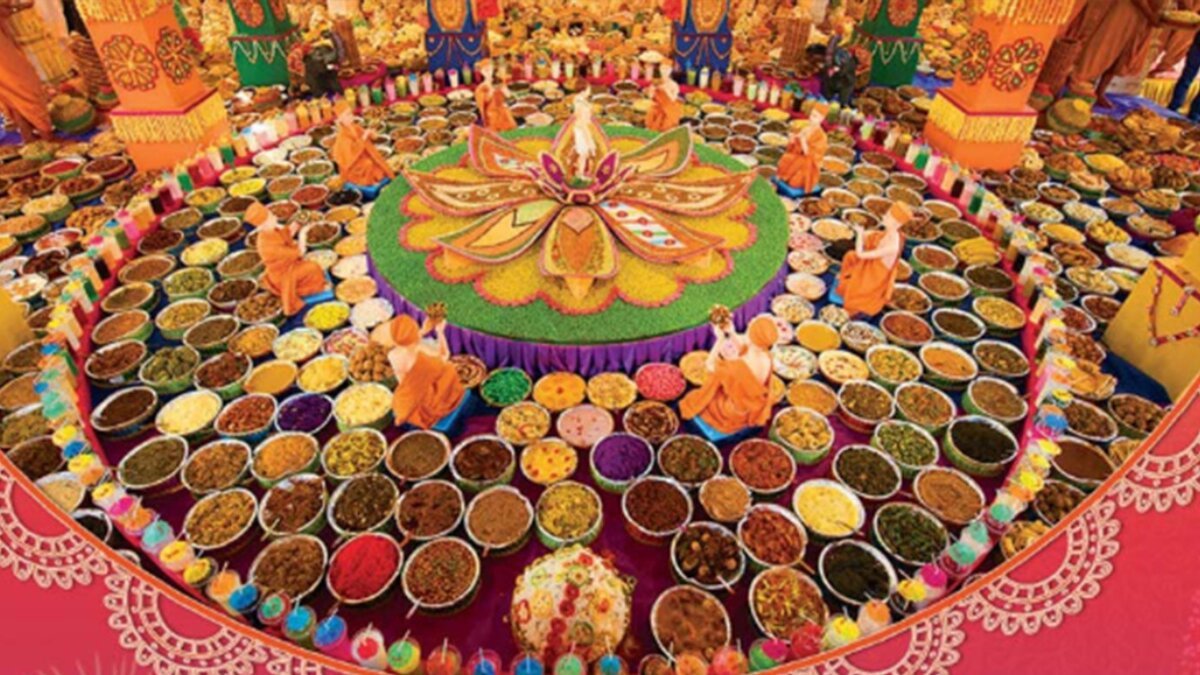
When it comes to delicious sweets, Lord Krishna’s favourites are dahi and makhan. There are numerous tales about Kanha, also called Makhan Chor, and how much he enjoys eating Makhan. Additionally, there is a custom of presenting Lord Krishna with 56 bhog, which is a lovely way to show him your love and devotion. Before being given to the god as prasad (blessed food) for devotees, the bhog is delivered to the deity as a sign of love and devotion.
Chappan Bhog is the most popular and essential bhog on Lord Krishna’s birthday. 56 distinct food varieties are included in Chappan Bhog, including dairy products, savoury eats, classic sweets, dry fruits, grains, lentils, and drinks prepared with love and dedication for Lord Krishna. Every meal is made with the greatest attention to purity and commitment. Legend has it that following the Govardhan Parvat incident, in which tiny Krishna used his little left finger to lift the entire Govardhan Mountain to provide shelter for the locals during the seven days of uninterrupted rain, devotees performed 56 bhog. If you are not preparing the 56 Bhog this Janmashtami, you should make Lord Krishna this traditional Bhog as a token of your love and devotion.
1. Makhan Mishri:
Made with fresh handmade butter (Makhan) and sugar crystals (Mishri), Makhan Mishri is the most favourite meal of Lord Krishna. The Makhan story that we have all heard represents Krishna’s carefree upbringing, and to show him love and devotion, the devotee created Makhan Mishri to enhance the significance of Janmashtami. This modest yet profound gesture respects both Krishna’s holy essence and his link to the material pleasures of life. Makhan Mishri, which is traditionally served in small earthen pots, is made with fresh cream of butter, which is well mixed with powdered sugar.
2. Panchamrit:
Panchamrit is a sacred combination consisting of milk, curd, honey, ghee, and sugar. This Panchamrit is also utilised during Lord Krishna’s Abhishek (ritual bathing), after which it can be distributed as Prasad to devotees. Panchamrit is seen as a sign of divine love and devotion to Krishna, used to seek his blessings. You can make this by combining equal parts milk, sugar, ghee, honey, and dahi and stirring carefully to ensure that all ingredients are thoroughly blended. Now you’re ready to present it to Lord Govinda in a silver dish.
3. Dhaniya Panjiri:
Dhaniya Panjiri, an essential typical offering, plays an important role at Janmashtami and is thought to be Kanha’s favourite dish. The Indian sweet is made with roasted coriander powder, ghee, dried fruit, and sugar. Dhaniya Panjiri’s sweet, fragrant, and nutty flavour makes it a delectable treat that is both healthy and nutritious for devotees and gourmets. The Dhaniya Panjiri dish is simple to prepare; simply toast the coriander powder in ghee until aromatic. Add powdered sugar and chopped dried fruits such as almonds, cashews, and raisins. Mix thoroughly, and you are ready to serve as a bhog.
4. Malpua:
Malpua, a traditional Indian sweet dish made with flour, sugar, milk, ripe bananas, and dried fruit, is another typical Janmashtami offering. To make malpua, a batter of flour, sugar, milk, and dry fruit is combined thoroughly, deep-fried till brown, and soaked in a sweet syrup to give it a rich texture and exquisite flavour. The delightful dessert is frequently prepared for significant occasions such as Holi and Diwali. The popular delight is thought to be one of Lord Krishna’s favourite foods.
5. Taler Bora:
Taaler bora is a distinctive sweet delicacy from West Bengal made from palmyra fruit pulp. The pulp is combined with rice flour, atta, grated coconut, jaggery, and cardamom to create a batter that is deep-fried into golden fritters. This meal is very famous in Bengal during Janmashtami, when it is served to Lord Krishna as part of the customary prasad ritual.
6. Gopalkala:
Gopalkala is a well-known Maharashtrian dish that is traditionally served during Janmashtami celebrations. It is made up of beaten rice (poha), curd, cucumber, and coconut, as well as spices such as asafoetida and cumin seeds. It is frequently served with fresh coriander and pomegranate seeds. This dish is evocative of the modest meals that Lord Krishna and his companions would eat in the field.