
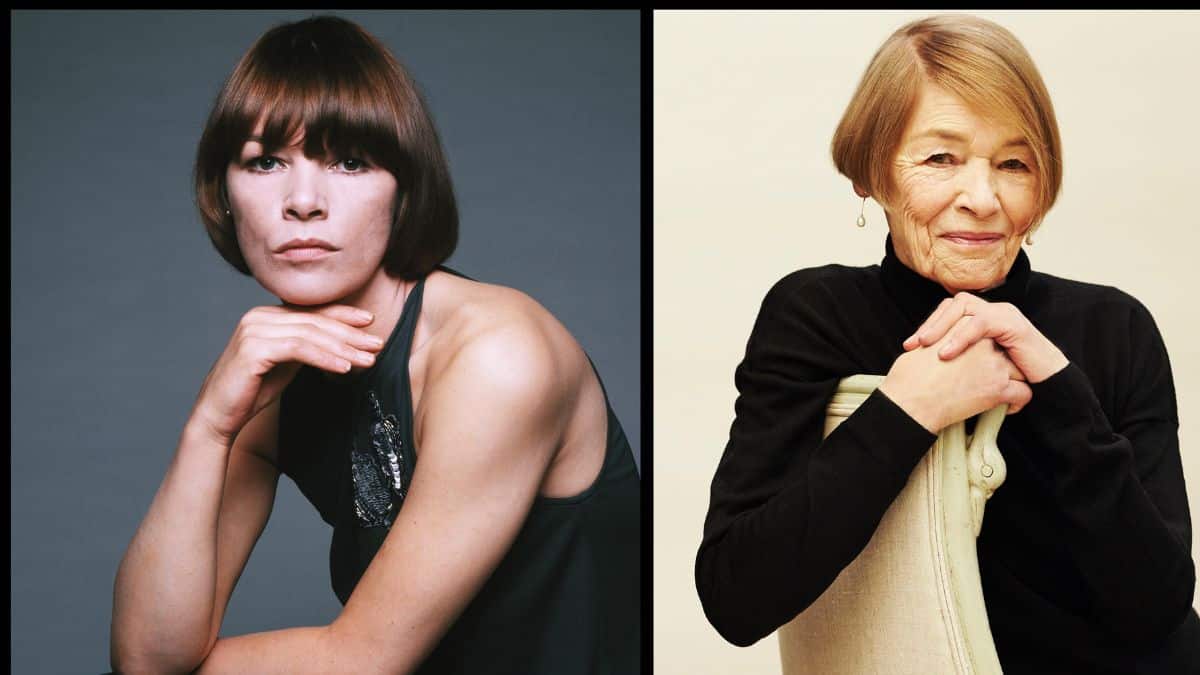
Glenda Jackson took her last breathe at the age of 87 at her home in London.
Her agent, Lionel Larner stated, “Glenda Jackson, two-time Academy Award-winning actress and politician, died peacefully at her home in Blackheath, London, this morning after a brief illness with her family at her side.”
Over six decades, Jackson dominated the constrained realms of stage and cinema like a behemoth. Even if the notoriously pessimistic actor would definitely have reached for her go-to quip after hearing such a Shakespearean tribute: “Oh, come on. Nothing less than “Good God, no,” will do for a performer who returned to the stage after a 23-year absence to portray King Lear at the age of 82. She not only won an Evening Standard theatre prize for her performance, but she also got the crowd to stand up when she attacked the awards’ sponsor, playing up to her fierce reputation. She claimed that the media has long mocked her as an actress and opposed her as a member of parliament, “so I’m left wondering what did I do wrong?”
Jackson was born in 1936 in Birkenhead, Merseyside, the first of four daughters to a bricklayer father and a cleaning mother. When she grew too tall, her early aspirations of becoming a dancer were dashed, and at 15, she quit West Kirby Grammar School for Girls in favour of a job working on Boots’ sales floor.
She spent six years working as a stage manager and actress in repertory theatres around the nation before coming to the attention of the RSC. She joined the organisation in 1964, right when director Peter Brook was creating a name for himself with a season named Theatre of Cruelty. As the prisoner assigned to play Charlotte Corday in Peter Weiss’s Marat/Sade, he cast her in the play. Years later, playwright David Edgar regarded her performance as one of the best he had ever seen in a production that “changed British theatre for ever.”
She later played the part again in a movie in 1967, after making a brief cinematic debut in Lindsay Anderson’s This Sporting Life. Two years later, her acting career really took off when she portrayed the abrasively sexual Gudrun in Ken Russell’s version of DH Lawrence’s novel Women in Love. She went on to win two Oscars for best actress, none of which she showed up to accept. Later, she claimed to have left her statuettes to her mother, whose fierce scrubbing quickly removed the gilded.