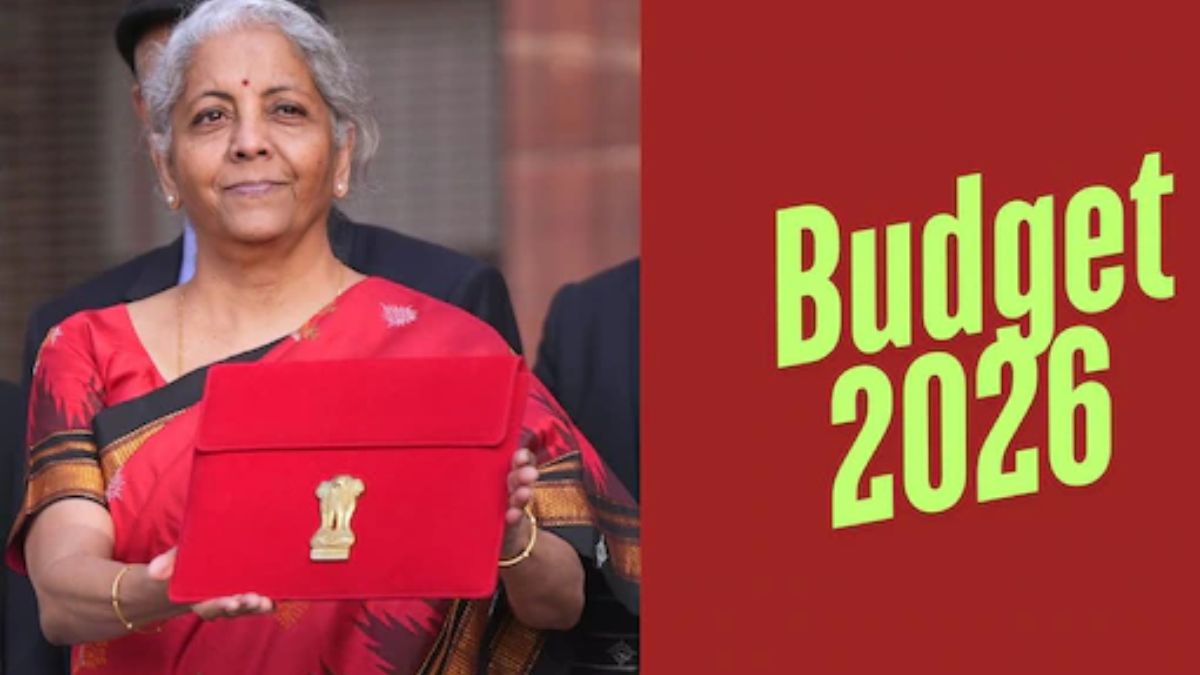
The Union Budget 2026–27 marks a clear continuation of India’s structural growth strategy, placing long-term capital formation, manufacturing depth and decentralised urban development ahead of short-term consumption stimulus. At a time when global growth remains uneven and supply chains continue to face geopolitical stress, the Budget underscores policy continuity and fiscal discipline, anchored by a rise in public capital expenditure to ₹12.2 lakh crore in FY27.
For the manufacturing and automobile ecosystem, this sustained capex push—alongside investments in freight corridors, waterways and industrial infrastructure—is expected to create demand multipliers across sectors. As Mr Shailesh Chandra, President, SIAM and MD & CEO, Tata Motors Passenger Vehicles Ltd, points out, “the decision to raise the capital expenditure target to Rs 12.2 lakh crore for FY 2026-27 from Rs 11.2 lakh crore in the current year will provide a strong impetus to demand creation and industrial activity, including the Automobile sector.” He adds that enhanced support for electronic components manufacturing, rare earth corridors and high-tech tool rooms will strengthen supply-chain resilience and streamline exports, while the allocation of 4,000 e-buses for Purvodaya States accelerates the transition to sustainable public mobility.
The Budget’s emphasis on manufacturing is closely tied to India’s mineral security and export competitiveness. Welcoming this direction, Anil Agarwal, Chairman, Vedanta Ltd, describes it as “a growth-oriented Budget, with a clear focus on increasing public capital expenditure and boosting manufacturing,” noting that rare earth corridors across Odisha, Tamil Nadu, Andhra Pradesh and Kerala will boost employment and mineral security. He highlights that import duty exemptions on capital goods for critical minerals processing are particularly timely, while flexibility in SEZs allowing some domestic sales is “an excellent move” that improves project viability and investment confidence.
Beyond large industry, Budget 2026 also strengthens the foundation for MSMEs, which remain central to India’s employment and credit ecosystem. From a banking perspective, Mr Prashanth T.S., President & Head – Mid-Corporates & Medium Enterprises Group, Axis Bank, says the Budget “meaningfully improves the growth runway for MSME banking in India” by addressing long-standing constraints around collateral and delayed cash flows. Measures such as expanded credit guarantees and faster adoption of TReDS, he explains, enable banks to scale MSME lending more sustainably while strengthening balance sheets and reinforcing the role of formalising enterprises in India’s next growth phase.
A defining theme of Budget 2026 is the deliberate push towards Tier-2 and Tier-3 cities as engines of future growth. According to Mr Shekhar Patel, MD and CEO, Ganesh Housing Limited, the Budget “reinforces a clear shift in India’s growth approach by placing Tier-2 and Tier-3 cities at the heart of the Viksit Bharat vision.” With continued focus on infrastructure, manufacturing, semiconductor ecosystems and digital capacity building, he notes that cities such as Ahmedabad are well positioned to attract businesses, talent and institutional capital. As enterprises and GCCs diversify their geographic footprint, demand is expected to rise for well-planned residential and commercial developments in emerging markets.
This decentralisation narrative is echoed across sectors. Dr. Anish Shah, Group CEO & MD, Mahindra Group, says the Budget “focuses on enhancing India’s competitiveness in the world, takes meaningful steps towards atmanirbharta and enables a wider participation in the benefits of economic growth.” He highlights the launch of initiatives such as Biopharma Shakti and ISM 2.0 as signals of intent to build global-scale manufacturing capabilities, while the ₹10,000 crore SME Growth Fund and industry cluster incentives support enterprise scaling and job creation. The sharp increase in capex, he adds, will crowd in private investment and strengthen Tier-2 and Tier-3 cities as emerging economic hubs.
Tourism and hospitality also emerge as strategic growth levers rather than consumption-led sectors. Mr Manoj Bhat, Managing Director & CEO, Mahindra Holidays & Resorts India Ltd, notes that the Budget “reinforces the government’s intent to use tourism and hospitality as levers for balanced economic growth,” with a focus on destination development beyond metros and stronger spiritual and heritage circuits. Equally critical, he says, is the emphasis on skilling and workforce development, which will determine the sustainability of tourism-led growth in smaller cities.
On the tax and consumption side, targeted measures aim to improve cash flows and reinvestment capacity. Mr Sudhir Sitapati, Managing Director & Chief Executive Officer, Godrej Consumer Products Ltd, welcomes “the MAT credit set-off being allowed up to 25% of the tax liability under the new tax regime,” noting that it frees up capital for reinvestment into growth and consumption-led categories.
From a real estate and urban development standpoint, Mr Gaurav Pandey, Co-Chairman, FICCI Committee on Urban Development and Real Estate, and Managing Director & CEO, Godrej Properties, points out that “the Union Budget 2026 continues the strong focus on infrastructure-led growth, with a record INR 12.2 lakh crore capital expenditure.” Measures such as the Infrastructure Risk Guarantee Fund, expansion of transport corridors and city economic regions, he says, are positive for medium-term real estate demand while reinforcing macroeconomic stability.
The Budget’s implications also extend deeply into risk management, insurance and financial protection. Mr Rakesh Jain, CEO, IndusInd General Insurance, describes Budget 2026–27 as “forward-looking and reassuring” in a volatile global environment. MSME-focused reforms, he explains, expand the base of insurable enterprises, while motor insurance reforms improve claimant outcomes and trust. Infrastructure expansion, renewable energy investments and the development of Tier-2 and Tier-3 cities will significantly increase demand for project, liability, climate and specialty insurance over time.
Finally, as digital public infrastructure expands, cyber resilience emerges as a foundational requirement. Nikhilesh Wani, Co-founder and CEO of Byteseal, notes that “as digital identity platforms expand across governance, finance, and citizen services, securing digital and biometric identities becomes mission-critical.” With ₹21,632 crore allocated to MeitY, the focus on identity security, data protection and fraud prevention will be central to preserving trust and enabling safe digital inclusion.
Taken together, Union Budget 2026 presents a coherent long-term blueprint—linking infrastructure, manufacturing, MSMEs, urbanisation, digital systems and risk management into a single growth narrative. Rather than chasing immediate gains, it lays the groundwork for sustained, broad-based economic expansion aligned with India’s Viksit Bharat ambitions.