The Bombay High Court stated on Friday that although it will take time to address Mumbai’s poor air quality, pollution from construction projects may be reduced provided current regulations are closely followed. An impartial five-person committee was established to monitor construction sites by a bench that included Chief Justice Shree Chandrashekhar and Justice Gautam Ankhad.
The panel consists of representatives from the public health department of the state government, the Maharashtra Pollution Control Board (MPCB), and the Brihanmumbai Municipal Corporation (BMC). According to news agency PTI, their job is to confirm if construction sites are adhering to pollution control procedures. The court was considering a number of petitions that highlighted Mumbai’s poor Air Quality Index (AQI), which the petitioners’ attorneys claimed has been progressively declining since 2023.
The BMC and MPCB were ordered by the court to provide a report by December 15th outlining the steps taken to reduce air pollution in the preceding year. “This will require some time. Delhi has been having difficulties for over 15 years. In actuality, Mumbai offers several advantages. It is possible in Mumbai, the court declared. Chief Justice Chandrashekhar compared Delhi, which has battled pollution for more than 15 years, to recognize that it will take time to improve air quality. But if the right actions were taken, he continued, Mumbai could produce superior outcomes.
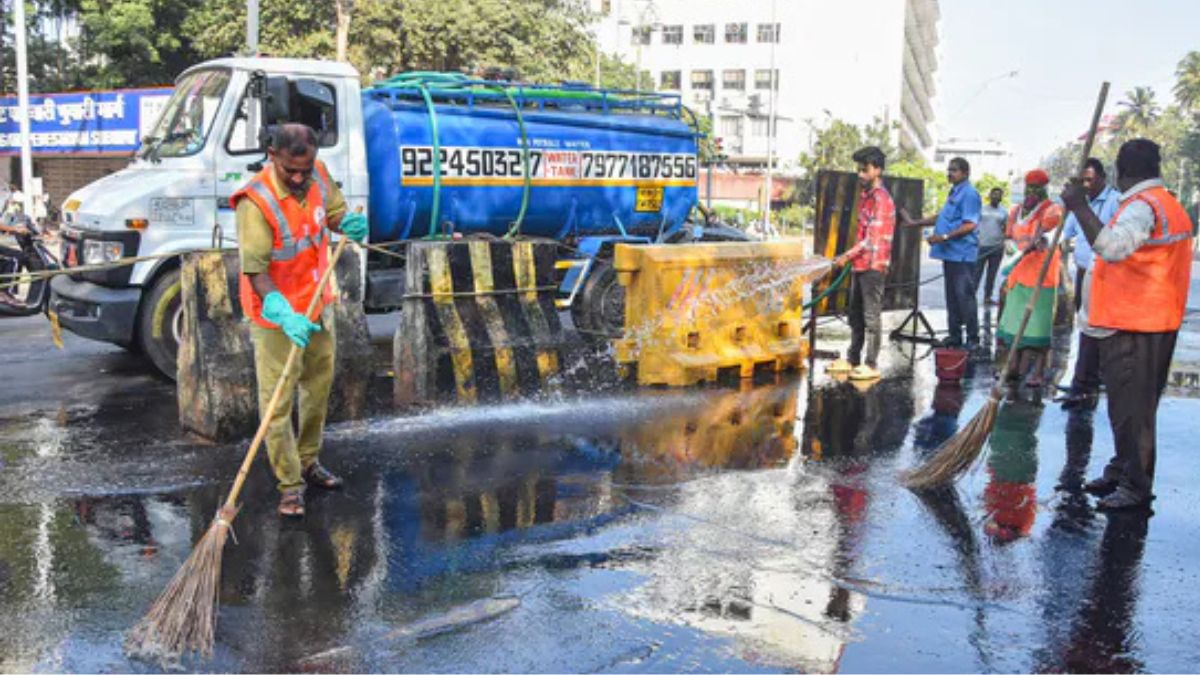
The court also demanded openness about BMC’s supervisory practices, which include sensor-based air pollution monitors at construction sites, CCTV camera installations, and special squad visits. “Let’s make sure that dust pollution and construction sites are addressed. In one to two weeks, it can be completed right away. The bench stated, “Those would be some effective measures.
The court-appointed senior lawyer Darius Khambata said that the 2024 construction site guidelines—which included CCTV surveillance, sensor use, and water sprinkling—were not being regularly followed. Although vehicle pollution is another issue, the court stated that it might be handled later. The court emphasized that if instructions were correctly followed, prompt action could be made to reduce dust and pollution associated to construction within one to two weeks.