
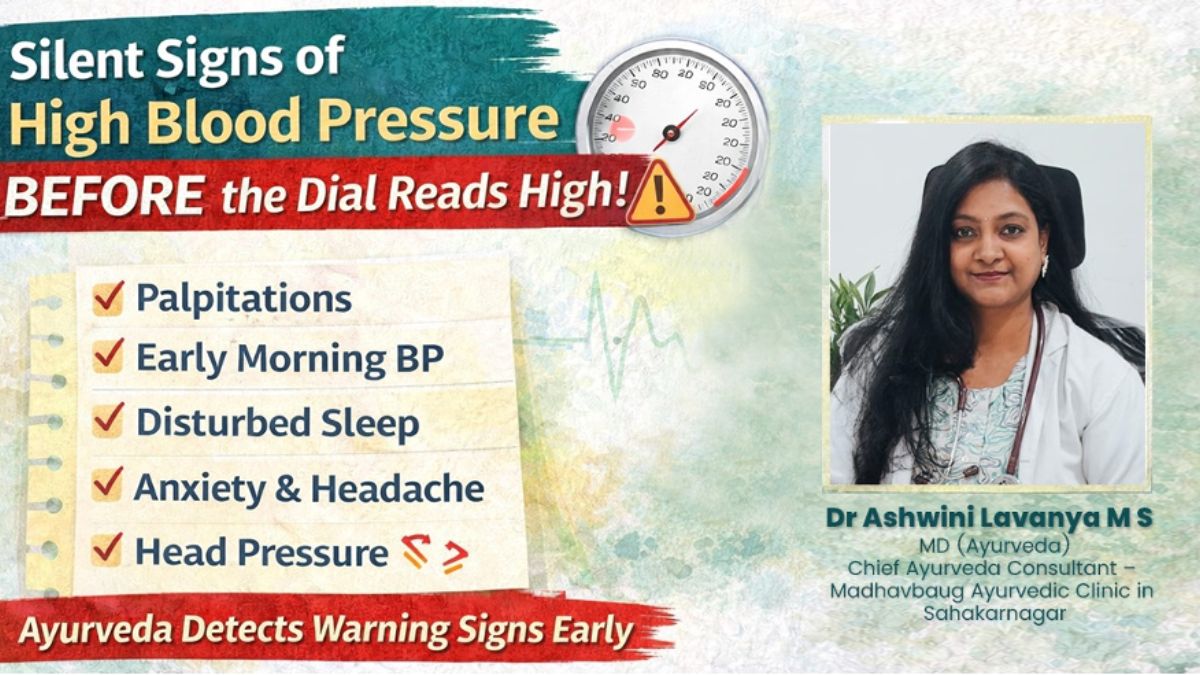
In my clinical practice, I often hear patients say,“Doctor, I never felt anything serious. My BP just came high suddenly.”The truth is—high blood pressure rarely arrives suddenly.
What we call hypertension, or Uccha Rakta Chāpa in Ayurveda, is not only a silent killer. It is also a silent messenger, sending subtle warnings long before the blood pressure numbers cross the danger mark.
These early signs of high blood pressure are often ignored, normalised, or blamed on stress, age, or work pressure.
Ayurveda Looks Beyond Numbers
Modern medicine identifies hypertension through readings. Ayurveda looks at imbalance long before the readings rise.
Ayurveda does not see high blood pressure as a single disease. It views it as a gradual breakdown of the body’s self-regulating systems, beginning in the mind and progressing to the blood vessels.
The key contributing mechanisms include:
- Mānasika Nidāna Janya (stress-related origin)
- Rakta-gata Vāta
- Prāṇa–Vyāna imbalance
- Pitta-pradhāna Rakta Duṣṭi
- Dhamanī Pratichaya (vessel thickening) and Srotorodha (channel obstruction)
It Often Begins in the Mind
1. Stress-Driven Blood Pressure Rise (Mānasika Nidāna Janya)
Mental and emotional factors such as:
- Chintā (constant worry)
- Bhaya (fear)
- Krodha (anger)
- Śoka (grief)
- Atichintana (overthinking)
- Suppressed emotions
create hormonal and nervous system imbalance.
When these stresses are repeated daily, they stop being temporary reactions and become chronic pathology. What starts as emotional imbalance slowly manifests as persistent BP elevation—commonly labelled as “essential” or stress-induced hypertension.
When Vascular Regulation Starts Failing
2. Rakta-gata Vāta & Vyāna Vāta Duṣṭi
Here, Vāta disturbs blood flow regulation:
- Blood vessels lose elasticity
- Circulation becomes forceful and erratic
- BP fluctuates or stays persistently high
This stage resembles loss of vascular tone regulation in modern physiology.
3. Prāṇa–Vyāna Imbalance
Prāṇa controls neural signals; Vyāna governs circulation.
Under chronic stress:
- Prāṇa overstimulates alert pathways
- Vyāna responds with increased cardiac force and vasoconstriction
This creates sympathetic dominance, leading to:
- Head pressure
- Palpitations
- Anxiety
- Insomnia
These are early signs of high blood pressure, often missed because BP may still appear “borderline”.
4. Pitta-Pradhāna Rakta Duṣṭi
Excess Pitta in blood and vessels causes:
- Heat and inflammation
- Reduced vessel relaxation
- Progressive stiffness
This stage resembles endothelial inflammation and rising cardiovascular risk.
5. Dhamanī Pratichaya & Srotorodha
Over time, arteries become:
- Thickened
- Hardened
- Less elastic
Channel obstruction (Srotorodha) pushes the condition from functional imbalance to structural disease, significantly increasing cardiac risk.
Why Many Patients Don’t Feel “Sick”
Early hypertension doesn’t shout—it whispers.
Common early symptoms include:
- BP rising during stress but normal at rest or on holidays
- Palpitations without exertion
- Early-morning BP surge
- Light or disturbed sleep
- Headaches, facial flushing, eye redness
- Excessive sweating
- Central obesity and fatigue
- Reduced exercise tolerance
- Cold hands and feet
Because these symptoms are mild, they are often dismissed—until the numbers rise.
What Ayurveda Observes Before BP Rises
Years before a diagnosis, Ayurveda evaluates:
- Sleep quality
- Digestive strength (Agni)
- Stress tolerance and emotional suppression
- Weight distribution and metabolic health
- Energy balance
This explains why “sudden” hypertension is rarely sudden.
Clinical Insight from Practice
In patients with hypertension, I consistently observe overlap with:
- Chronic stress
- Poor sleep routines
- Digestive imbalance
- Insulin resistance
- Sedentary lifestyle
Hypertension is rarely an isolated condition. Addressing only the BP reading, without correcting these contributors, limits long-term success—even with conventional high blood pressure treatment.
A Message for Patients
High blood pressure starts before the numbers—with fatigue, disturbed sleep, mental restlessness, and metabolic imbalance.
Ayurveda listens to these early whispers. When applied alongside modern care, it helps:
- Slow disease progression
- Reduce medication dependence (when appropriate)
- Improve cardiac and metabolic resilience
This is the deeper role of ayurvedic treatment for high blood pressure—restoring balance, not just controlling readings.
Conclusion
Modern medicine protects organs.
Ayurveda restores balance.
Together, they don’t just control BP—they explain why it rises.
If you are experiencing persistent “minor” symptoms, don’t ignore them. They may not yet be disease—but they are no longer health.
By Dr Ashwini Lavanya M S
MD (Ayurveda)
Chief Ayurveda Consultant – Madhavbaug Ayurvedic Clinic in Sahakarnagar
20+ years of clinical experience in lifestyle & cardiac disorder management