
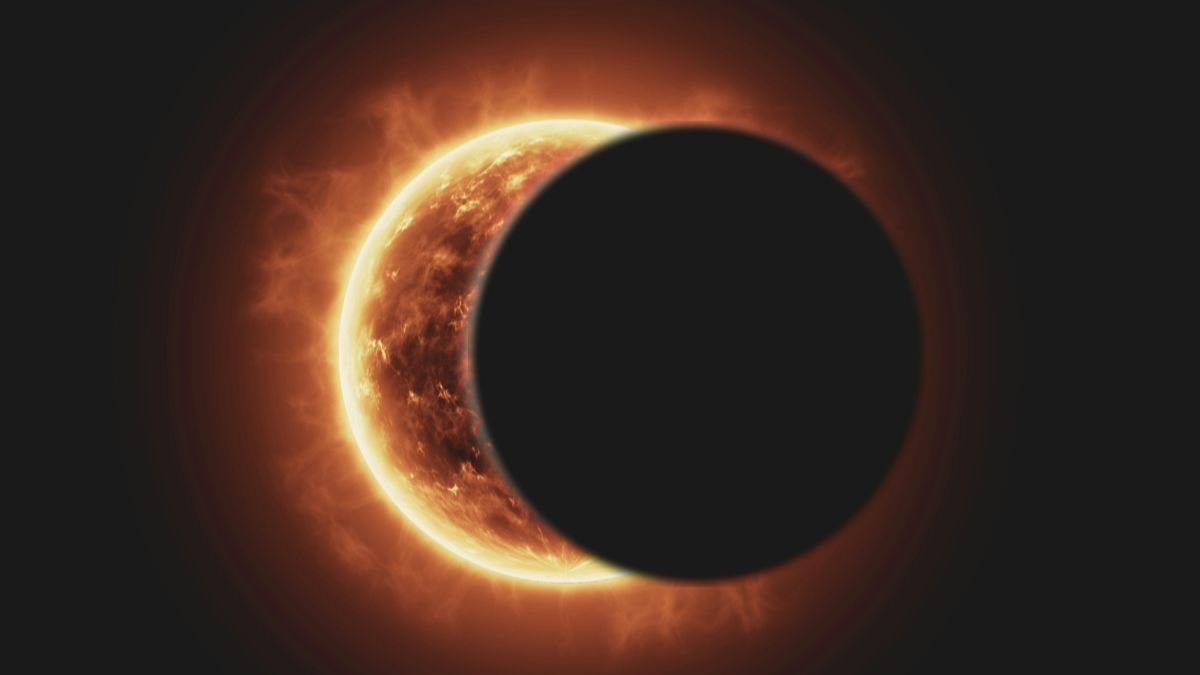
On March 29, 2025, skywatchers around the world will have the chance to witness a remarkable celestial event—a solar eclipse. This natural phenomenon occurs when the Moon passes between the Earth and the Sun, temporarily blocking the Sun’s light either partially or completely. Whether you’re an astronomy enthusiast or a curious observer, this guide will provide you with all the essential details about the March 29, 2025, solar eclipse, including what to expect, where to see it, and how to enjoy it safely.
What Is a Solar Eclipse?
A solar eclipse happens when the Moon aligns perfectly with the Sun and Earth, casting a shadow on our planet. There are three main types of solar eclipses:
- Total Solar Eclipse: The Moon completely covers the Sun, revealing the Sun’s outer atmosphere, known as the corona.
- Partial Solar Eclipse: The Moon covers only a portion of the Sun, creating a crescent-shaped view.
- Annular Solar Eclipse: The Moon is too far from Earth to fully cover the Sun, leaving a bright ring, or “ring of fire,” around its edges.
The solar eclipse on March 29, 2025, will be a partial solar eclipse visible in specific regions, making it an exciting event for those in the right locations.
When and Where to See the March 29, 2025, Solar Eclipse
The partial solar eclipse on March 29, 2025, will be visible primarily in parts of the Northern Hemisphere. While it won’t be a total or annular eclipse, it will still offer a stunning view for those within its path. The eclipse will be observable in:
- North America: Parts of Canada, Greenland, and the northeastern United States.
- Europe: Northern regions, including parts of Scandinavia, Iceland, and Russia.
- Arctic Regions: Areas near the North Pole will experience the most significant coverage.
The eclipse will begin in the early morning hours (local time) and last for a few hours, with the peak varying by location. For precise timings, consult local astronomy resources or use an eclipse calculator tailored to your city. Since this is a partial eclipse, the Sun will never be fully obscured, but a noticeable portion will be blocked, depending on your proximity to the eclipse’s central path.
How to Watch the Solar Eclipse Safely
Safety is paramount when viewing a solar eclipse. Looking directly at the Sun, even during a partial eclipse, can cause severe eye damage or blindness. Here’s how to enjoy the March 29, 2025, eclipse safely:
- Solar Eclipse Glasses: Use certified solar viewing glasses that meet the ISO 12312-2 standard. Regular sunglasses won’t suffice.
- Pinhole Projectors: Create a simple projector using a piece of cardboard with a small hole to project the Sun’s image onto a surface.
- Telescopes or Binoculars with Solar Filters: Ensure any optical devices have proper solar filters attached.
- Live Streams: If you’re outside the visibility zone or prefer to stay indoors, many organizations, such as NASA, will offer live online broadcasts.
Never attempt to view the Sun without proper protection, even when it’s partially covered.
What Makes the March 29, 2025, Eclipse Special?
While the March 29, 2025, event is a partial solar eclipse and not as dramatic as a total eclipse, it’s still a unique opportunity to connect with the cosmos. Here’s why it stands out:
- Timing: Occurring just after the spring equinox, it aligns with a season of renewal and longer daylight hours in the Northern Hemisphere.
- Accessibility: The eclipse’s visibility across populated northern regions makes it accessible to millions without requiring extensive travel.
- Educational Value: It’s a perfect chance for families, students, and beginners in astronomy to learn about celestial mechanics.
Fun Facts About Solar Eclipses
- Solar eclipses can only occur during a New Moon phase when the Moon is positioned between the Earth and the Sun.
- The Moon’s shadow travels across Earth at speeds of up to 2,000 miles per hour during an eclipse.
- Partial solar eclipses are more common than total ones, but each one is unique based on the alignment and distance of the Moon.
Preparing for the March 29, 2025, Solar Eclipse
To make the most of this event, plan ahead:
- Check Your Location: Confirm whether your area lies within the eclipse’s visibility zone using an interactive eclipse map from reputable astronomy websites like timeanddate.com or NASA’s eclipse portal.
- Gather Supplies: Purchase solar glasses or materials for a pinhole projector well in advance, as demand may spike closer to the date.
- Learn the Schedule: Note the start, peak, and end times for your location to avoid missing the show.
- Invite Friends: Share the experience with others—eclipses are more fun with a group!
Why Solar Eclipses Fascinate Us
Solar eclipses have captivated humanity for centuries, inspiring myths, scientific discoveries, and awe. They remind us of our place in the universe and the intricate dance of celestial bodies. The March 29, 2025, partial solar eclipse may not plunge the world into darkness, but it’s a beautiful reminder of nature’s wonders.
Final Thoughts
The solar eclipse on March 29, 2025, is a must-see event for anyone interested in astronomy or simply looking for a memorable outdoor activity. With the right preparation and safety measures, you can enjoy this cosmic spectacle and share it with others. Mark your calendar, grab your solar glasses, and get ready to witness the Moon take a bite out of the Sun!