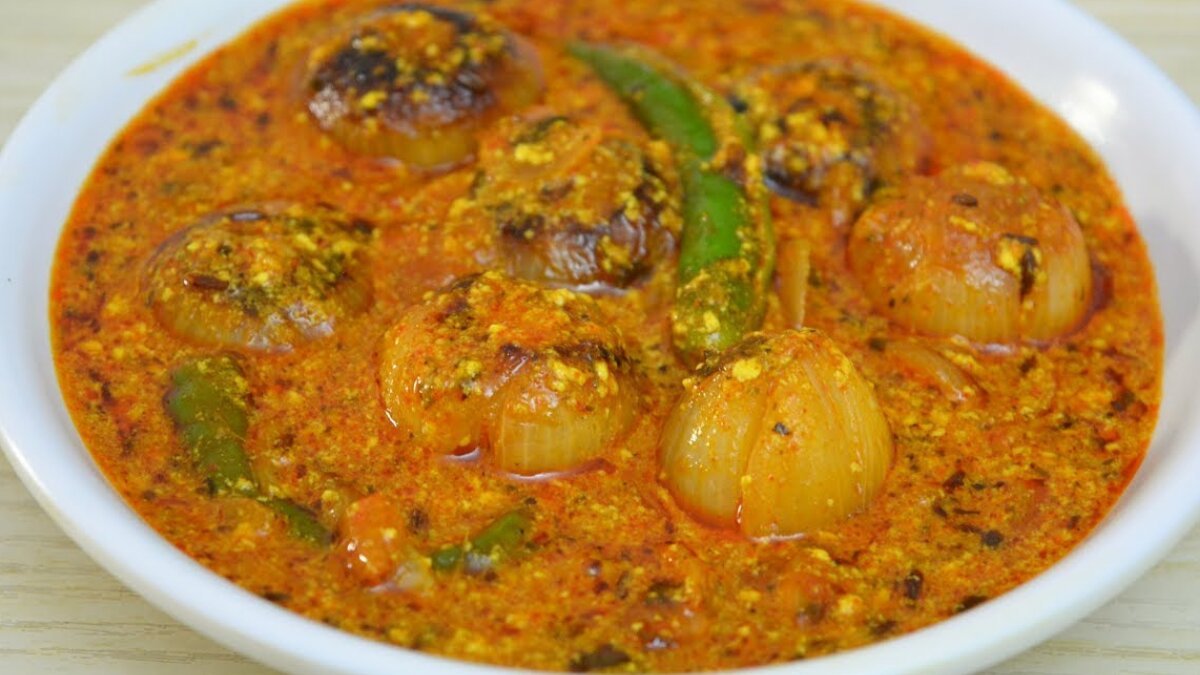
Dahi pyaaz curry is one of those simple recipes that manage to deliver rich flavour with minimal ingredients. Common in North Indian kitchens, especially in Rajasthan and Uttar Pradesh, this curry brings together curd (dahi) and onions (pyaaz) in a dish that’s tangy, mildly spiced, and deeply comforting. It’s the kind of recipe that comes to the rescue when you’re low on vegetables but still want something warm and flavourful.
The combination of caramelised onions and spiced curd gives the curry a thick, creamy texture with natural sweetness and slight tang. It doesn’t rely on tomatoes or heavy masalas, yet tastes hearty and satisfying. Dahi acts as the base and thickener, while the onions provide depth and body. A tempering of spices like mustard seeds, fennel, turmeric, and hing adds that extra aromatic punch.
This curry is also easy to digest, making it a great option for a light lunch or dinner. You can enjoy it with roti, paratha, or even steamed rice. It’s ready in under 30 minutes and is a perfect way to use everyday pantry staples creatively. Here’s how to make dahi pyaaz curry at home in five easy steps.
Step 1: Whisk the curd until smooth
Start with one and a half cups of fresh curd. Use a whisk or fork to beat it until completely smooth and lump-free. Add a tablespoon of besan (gram flour) and a pinch of turmeric to the curd and whisk again. The besan helps stabilise the curd while cooking so it doesn’t split. Set this mixture aside. Make sure the curd is at room temperature and not sour, as it will affect both the texture and taste of the curry.
Step 2: Slice and sauté the onions
Take two medium-sized onions and slice them thinly. In a pan, heat two tablespoons of oil and add the onions. Sauté them on medium heat until they turn golden brown and slightly caramelised. This step brings out the natural sweetness of the onions and balances the tanginess of the curd. Stir occasionally and be patient, it may take 7 to 10 minutes. You can add a pinch of salt to help the onions cook faster.
Step 3: Add the basic tempering and spices
Once the onions are golden, push them to the side of the pan and add half a teaspoon of mustard seeds, a pinch of asafoetida (hing), and a quarter teaspoon of fennel seeds to the oil in the centre. Let the seeds splutter and release their aroma, then mix them into the onions. Now add red chilli powder, coriander powder, and salt to taste. Stir everything well so the onions are fully coated with the masala.
Step 4: Slowly add the curd mixture and simmer
Reduce the heat to low and gently pour in the curd mixture while stirring continuously. Stirring ensures the curd doesn’t split or curdle. Once added, continue to stir until the mixture thickens slightly and comes to a gentle boil. Simmer the curry for 4–5 minutes on low heat, stirring occasionally. You can adjust the consistency by adding a little water if the curry seems too thick. Let the flavours blend and switch off the heat once the curry is rich and creamy.
Step 5: Garnish and serve with rice or roti
Once cooked, let the curry rest for a few minutes before serving. Garnish with fresh coriander leaves or a light sprinkle of garam masala for added warmth. Dahi pyaaz curry pairs beautifully with hot phulkas, parathas, or plain steamed rice. It also makes for a comforting thali component when served with pickle and salad on the side. For a spicier version, you can add green chillies or crushed garlic in the tempering.
Dahi pyaaz curry is a true example of how simple pantry ingredients can be transformed into a dish full of taste and comfort. With no heavy cream, butter, or elaborate preparation, it still offers a rich and satisfying flavour profile. Whether you’re cooking for a regular weeknight meal or looking for something light yet delicious, this curry is always a dependable and heartwarming choice.