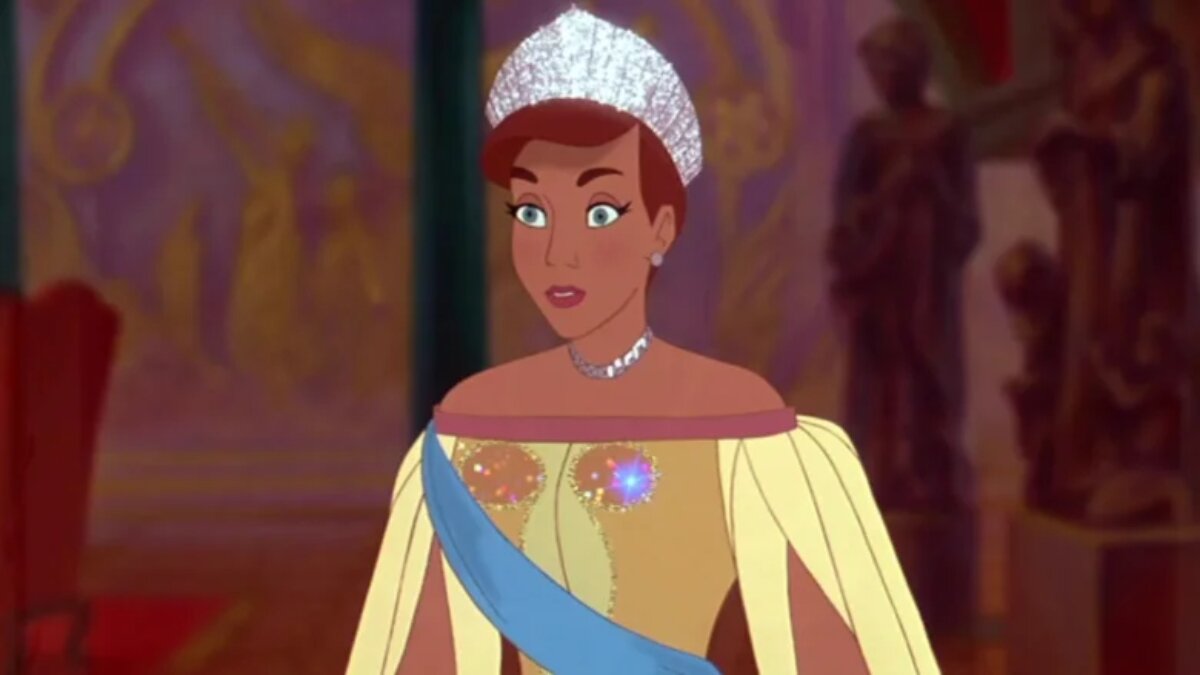
The 1997 animated film Anastasia is a tale of rumors—both in its plot and in its real-world legacy. The story follows a young woman on a journey to uncover her past, wrapped in mystery and adventure. Similarly, for decades, the film itself has been shrouded in the misconception that it was originally a Disney movie. This misunderstanding is understandable, as the film’s style fits seamlessly into the golden age of Disney animations like Aladdin and Beauty and the Beast. With memorable songs, a cute puppy companion, and a dashing love interest, it feels very much like something Disney would produce.
However, Anastasia was actually created by 20th Century Fox, not Disney. Upon its release, the film garnered a solid $14 million opening and went on to earn two Academy Award nominations in 1998. The character of Anastasia, voiced by Meg Ryan, became an iconic “princess” of the ’90s. But to the disappointment of Disney fans, she was never officially part of the Disney lineup—until much later.
What is Anastasia about?
Loosely based on the historical Romanov family, Anastasia takes a family-friendly, fantasy approach to the tragic events. The film centers on Anya, a young woman with no memory of her origins, raised in an orphanage. Meanwhile, rumors swirl in Russia about a generous reward offered by the Dowager Empress Marie (Angela Lansbury) for anyone who can reunite her with her long-lost granddaughter Anastasia, who vanished during the chaos of her family’s demise.
Anya crosses paths with two scheming conmen, Dimitri (John Cusack) and Vladimir (Kelsey Grammer), who train her to pose as Anastasia to claim the reward. However, they begin to suspect that Anya might actually be the missing princess. Their journey is complicated by Rasputin (Christopher Lloyd), a vengeful mystic bent on destroying Anya, leading to thrilling moments of danger, courage, and self-discovery.
Was Anastasia made by Disney?
Contrary to popular belief, Anastasia was not a Disney creation. In fact, it was deliberately crafted to compete with Disney’s princess dominance. Directed by Don Bluth, a former Disney animator who left the company in 1979, the film was part of 20th Century Fox’s effort to establish its own foothold in animated cinema. Bluth, known for classics like The Secret of NIMH and The Land Before Time, brought his distinct style to the film.
Despite facing stiff competition, Anastasia became the highest-grossing non-Disney animated movie at the time, with global earnings of $139 million. It held that title until 1998, proving it could stand tall alongside its Disney counterparts.
Why is Anastasia considered a Disney movie now?
In 2019, Disney acquired 21st Century Fox, bringing Anastasia under its banner. The film is now available on Disney+, alongside other iconic Disney princess films. While this shift amused and surprised fans, Don Bluth had a positive outlook on the transition. In an interview, he said, “As long as people see it and enjoy the story and it enriches their lives, I’m okay with that. But if they start marketing her as just another Disney princess, I might frown a little.”
Today, Anastasia resides in the same catalog as Cinderella and Mulan, but it continues to stand apart with its unique animation style, adventurous plot, and a love story that breaks traditional molds while still delivering a happy ending. It remains a beloved gem of ’90s animation, appealing to audiences both old and new.