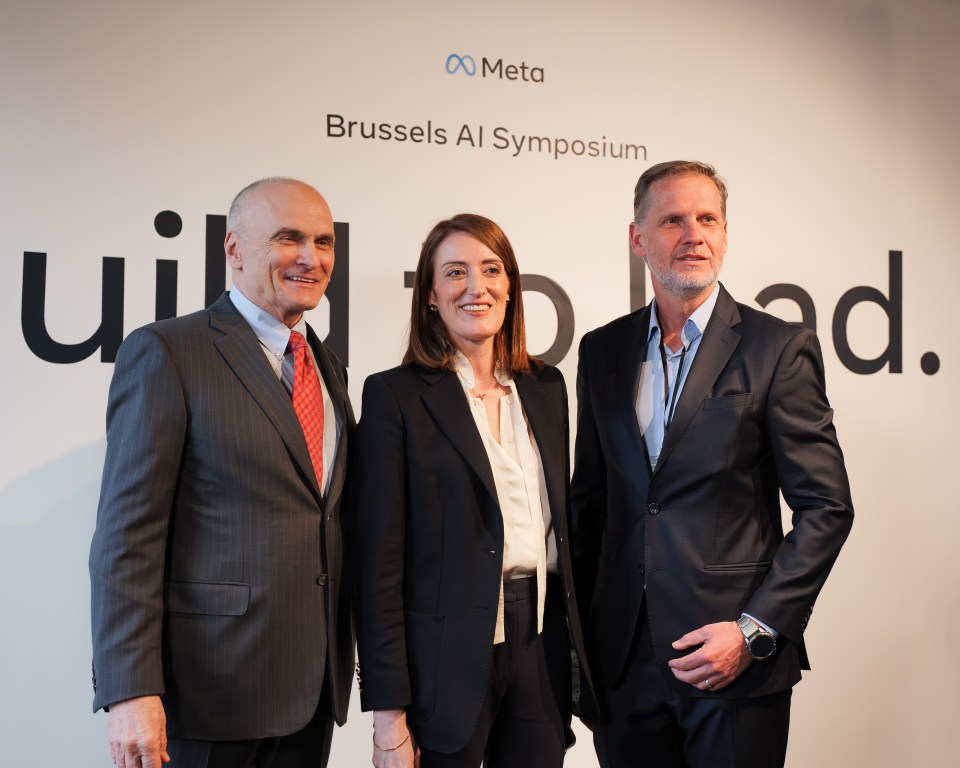
On March 24, Meta hosted an event titled ‘Build to Lead: The Brussels AI Symposium.’ This gathering brought together influential figures such as European Parliament President Roberta Metsola, US Ambassador to the EU Andrew Puzder, Italian Vice Minister Valentino Valentini, UK AI Adviser Matt Clifford, and leaders from various industries and civil society. The central question posed at the symposium was whether Europe can capitalize on the opportunities presented by artificial intelligence (AI).
Markus Reinisch, Meta’s Vice President of Public Policy Europe, delivered opening remarks, expressing gratitude to the attendees. He acknowledged the pervasive uncertainty surrounding the economy, security, and global direction. However, Reinisch emphasized the importance of building a resilient future in Europe, driven by strong institutions, skilled individuals, and innovation.
Reinisch highlighted the critical role of AI and its ecosystem in fostering resilience in Europe. He praised European leadership and companies like Essilor-Luxottica and Circus Group, which are instrumental in developing the next technological platforms.
Reinisch also addressed some challenging truths about the global AI race. He noted that the competition is rapidly evolving into a two-horse race between the United States and China, both vying for technological and economic dominance. This race also involves the question of embedding Western democratic values in future technologies.
Europe, he warned, risks falling behind, even as a potential third player. Other regions, such as India and the Middle East, are advancing quickly through ambition and investment, which could shift the global balance.
The key question, according to Reinisch, is how Europe can enhance its leadership swiftly. He discussed ideas like tech sovereignty and strategic autonomy but cautioned against trying to replicate every technological layer independently, as it might cause Europe to lose momentum.
Reinisch advocated for simplification, suggesting that Europe needs to dismantle some regulatory barriers. However, he expressed concern that current efforts are insufficient, as those tasked with reforming regulations are often the same individuals who established them.
He proposed a third approach, focusing on Europe’s strengths in world-class science, design, engineering, and transforming technology into trusted products. Reinisch expressed pride in Meta’s collaboration with EssilorLuxottica on wearables, which he believes could become the next computing platform.
Reinisch argued that Europe should not be constrained by outdated rules, using the example of AI glasses with unique Italian design hampered by inappropriate requirements like battery replaceability.
His message was clear: Europe needs fewer self-imposed barriers and more confidence. By aligning values with speed and principles with investment, Europe has the potential not just to participate in the AI era, but to lead it. Reinisch concluded by emphasizing Meta’s commitment to Europe, highlighting the company’s investment in the region and its belief in a collaborative future.