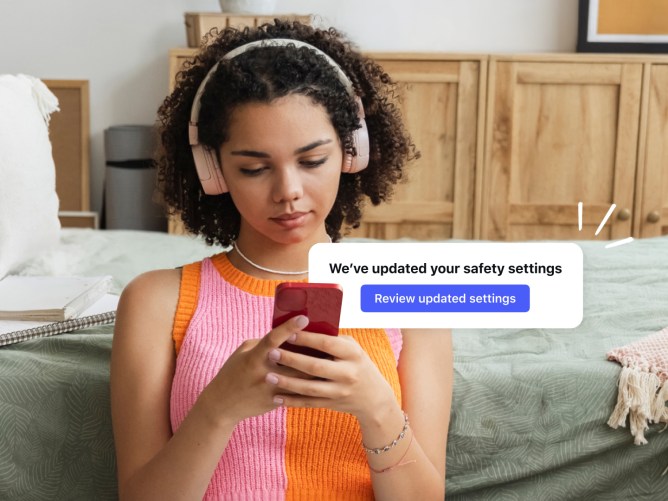
Meta is committed to ensuring that young people have safe, positive experiences online by automatically placing teens in default, age-appropriate experiences, such as Teen Accounts. The company has shared updates on the age assurance technology it uses to help ensure teens are in the right experiences for their age. This includes efforts to strengthen underage enforcement, with the addition of AI visual analysis and other advancements. Expanded protections are being implemented for teens suspected of misrepresenting their age on Instagram in the EU and Brazil, and on Facebook in the US. Meta is also working to support parents in discussing the importance of providing the correct age online with their teens.
For over a decade, Meta has developed tools, features, and resources to ensure that teens have safe, age-appropriate experiences on its apps. This includes the launch of Teen Accounts on Instagram, Facebook, and Messenger, which come with built-in protections limiting who can contact teens and the content they see. Content policies have been updated to automatically place teens under 18 into a 13+ content setting.
To ensure teens are placed in these default experiences, Meta needs to know their age, which is a complex challenge in the online industry. The company is heavily investing in age assurance technology to identify teens, even if they list an adult birthday. Efforts to strengthen underage enforcement include the development of advanced AI that detects underage accounts using visual analysis to look beyond simple admissions of age. AI technology analyzes entire profiles for contextual clues, such as birthday celebrations or mentions of school grades, to determine if an account likely belongs to someone underage.
Additionally, visual analysis is being added as a new technique to aid detection efforts. This technology allows AI to scan photos and videos for visual clues about a person’s age. By combining visual insights with text and interaction analysis, Meta can increase the number of underage accounts identified and removed. Meta is also simplifying reporting flows to make it easier for the community to report underage accounts, using AI models to evaluate reports consistently.
Meta is expanding its technology to place teens in Teen Account protections. Since 2024, hundreds of millions of teens have been enrolled in these accounts on Instagram, Facebook, and Messenger. The technology, designed to find accounts suspected to be teens, is now expanding to 27 countries in the EU and Brazil. It will also be introduced to Facebook in the US, followed by the UK and the EU in June, with plans for global expansion throughout the year.
Parents play a crucial role in keeping teens safe online, and Meta is sending notifications to parents in the US with information on checking and confirming their teens’ ages on Facebook and Instagram. These notifications include tips on having constructive conversations about providing the correct age online. Parents globally can access tools and resources through the Family Center.
Meta’s existing age assurance measures include estimating age based on activity and reviewing user reports. If someone is suspected of misrepresenting their age, they are required to verify it using an ID or Yoti’s facial age estimation tools. Meta believes that legislation should require app stores to verify age, providing a centralized, consistent, and privacy-preserving place for age assurance. This approach aligns with the views of 88% of US parents and ensures that all apps teens use offer the same standard of protection.